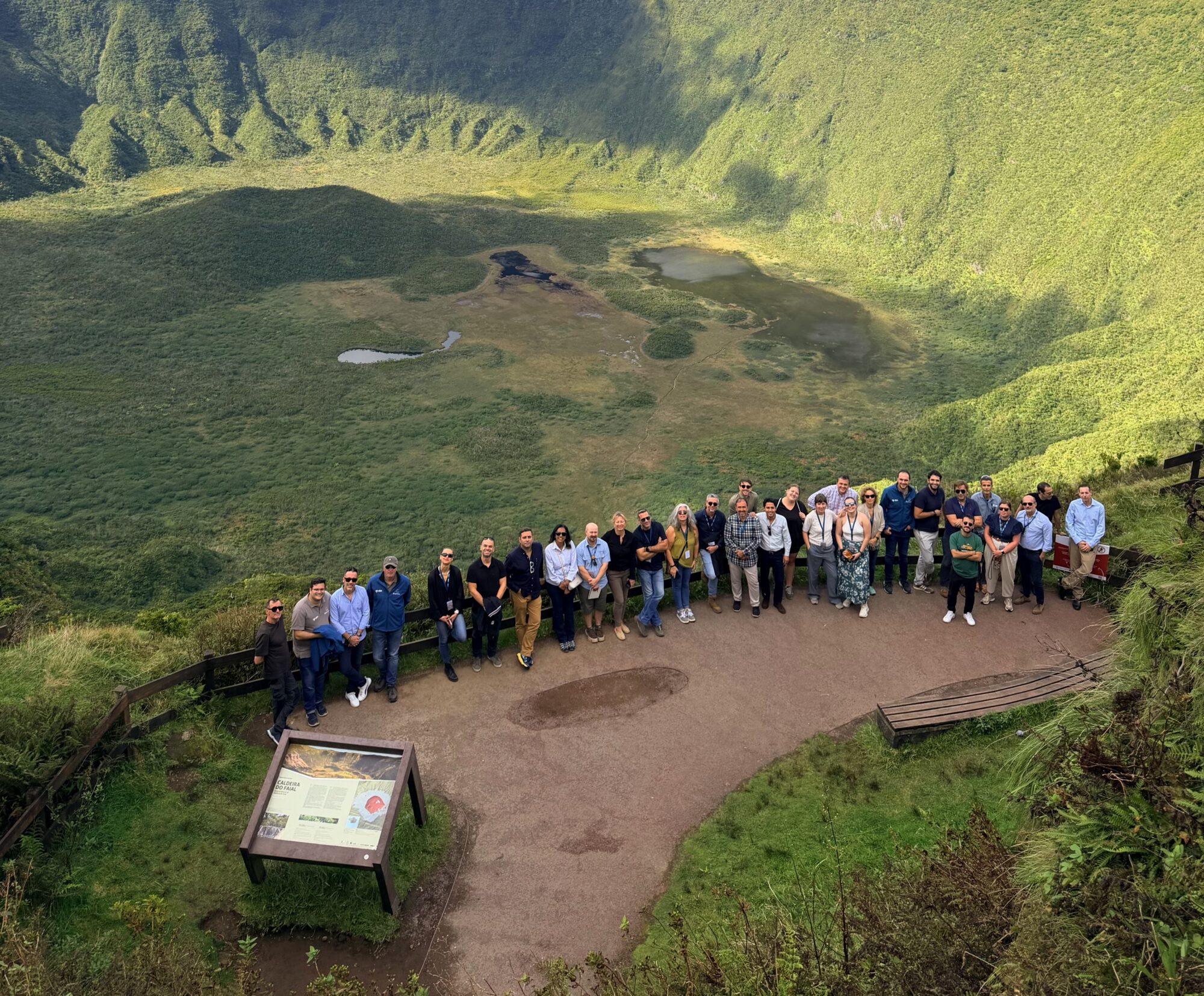
Horta, Faial (Azores), 6-8 October 2026. The GENESIS consortium met in Horta, on the island of Faial, for its 3rd General Assembly. The meeting was hosted by the Município da Horta and Trisolaris Advanced Technologies, and coordinated by IGME-CSIC. It ended with a Clustering Workshop, organised by La Palma Research Centre (LPRC), that opened the project’s work to sister initiatives and regional stakeholders.
Building the foundations, and real solutions in action.
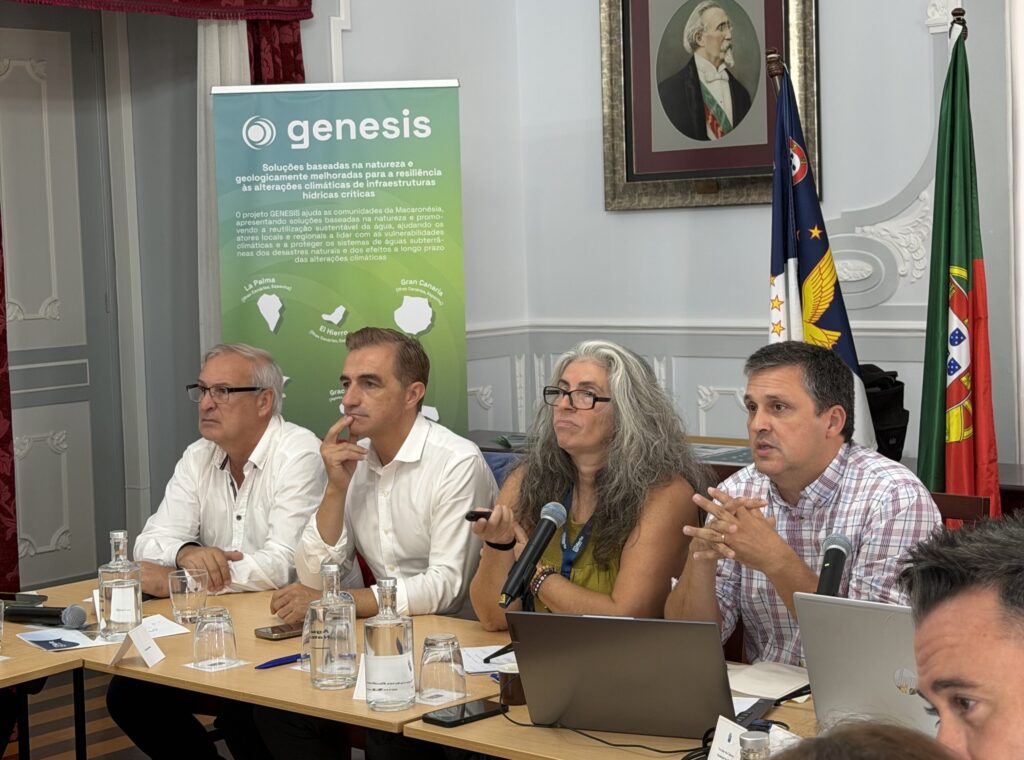
On the first day, partners met at the Salão Nobre of the Horta Town Hall to review the project’s progress after its first reporting period. Each work package presented its objectives, scheduled actions, planning and deliverables. The topics included the Macaronesia water climate risk observatory, NbS mainstreaming and social engagement, the implementation of demonstrators and replicators, the La Palma deep demonstrator (Living Lab), the modelling of water resources and critical water infrastructure, and dissemination, management and the exploitation of Key Exploitable Results. Partners also held working sessions on technical, administrative and strategic issues.
The second day focused on the nine demonstrators across Macaronesia. The teams presented the case studies in El Hierro, La Palma (Barlovento, Trasvase, Tenisca and Angustias), Gran Canaria, Faial, Santiago and Madeira. The work package leaders then summarised the steps and actions planned for the next six months.
The group also visited the Faial demonstrator at Cancelas Well. There GENESIS will design and build an aquifer storage and recovery system to counter saltwater intrusion and restore the freshwater supply capacity of Furo das Cancelas. The system will use excess potable water stored in existing earth dams and watering ponds to recharge the aquifer through two injection wells.
Clustering Workshop: “Water nature-based solutions for islands’ resilience”
On 7-8 October, the workshop used Faial as a shared case study and brought GENESIS together with other projects and local actors. It was held in Horta and online, and covered:
- Faial’s critical water infrastructure: its interdependencies, the climate pressures and risks it faces, and the potential cascading impacts.
- Existing NbS in Faial: solutions from GENESIS, the Observatório das Ribeiras e Lagoas (ORLA) and LIFE IP CLIMAZ, with the Azores Government.
- Expanding the NbS toolbox: contributions from GENESIS, Med-IREN, NATURE-DEMO and S+T+ARTS Aqua Motion.
- NbS cost-benefit canvas exercise: a hands-on session led by the Universidad de La Laguna, with individual and group work and a final discussion.
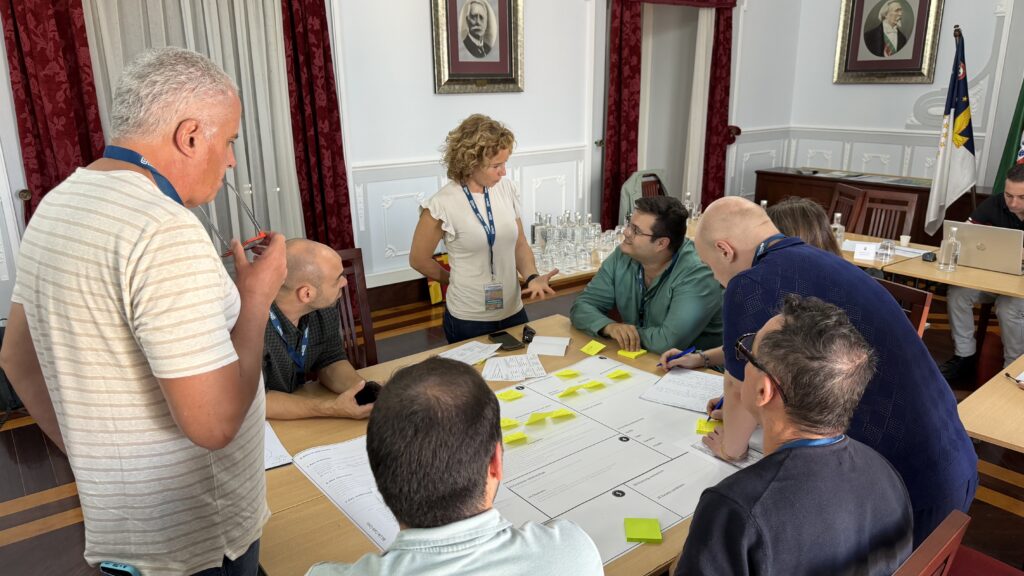
The exchange helped identify synergies between projects and strengthen the links needed to replicate and scale nature-based solutions in islands and other vulnerable regions of the European Union.
With the work plan for the next six months agreed, GENESIS will continue implementing its demonstrators and replicators, and will build on the cooperation started in Faial with the participating projects.
Thank you to the Município da Horta and Trisolaris Advanced Technologies for hosting, to the speakers and sister projects, and to everyone who took part, in person and online.