
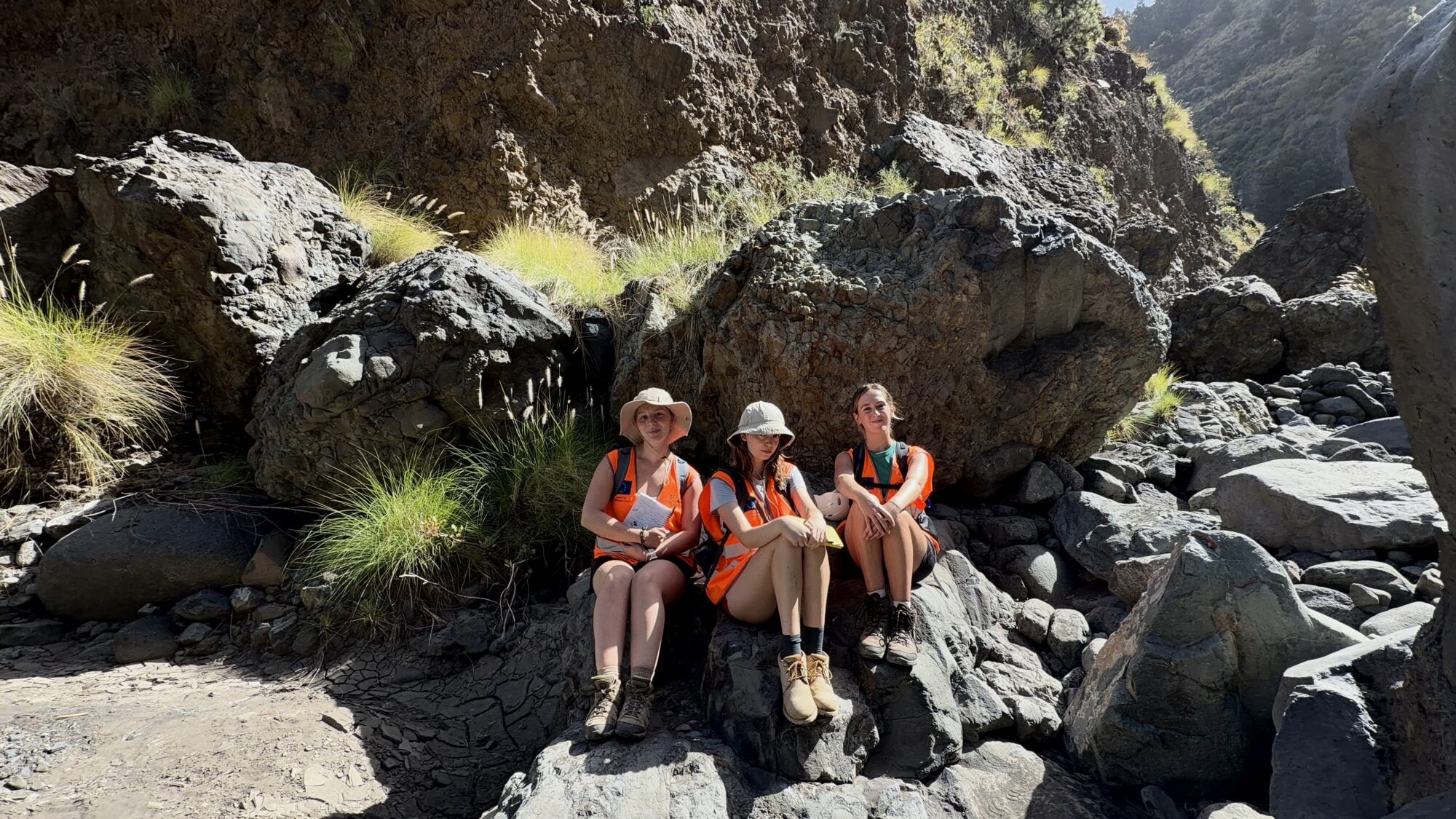
The GENESIS Training Bootcamp, hosted by GeoTenerife, with the support of AIM, Consejo Insular de Aguas and LPRC offered students an immersive educational and practical experience focused on nature-based solutions (NbS) for groundwater management in La Palma. Combining scientific learning, fieldwork and communication activities, the programme provided participants with the opportunity to explore water management challenges within the island’s unique volcanic and hydrological environment.
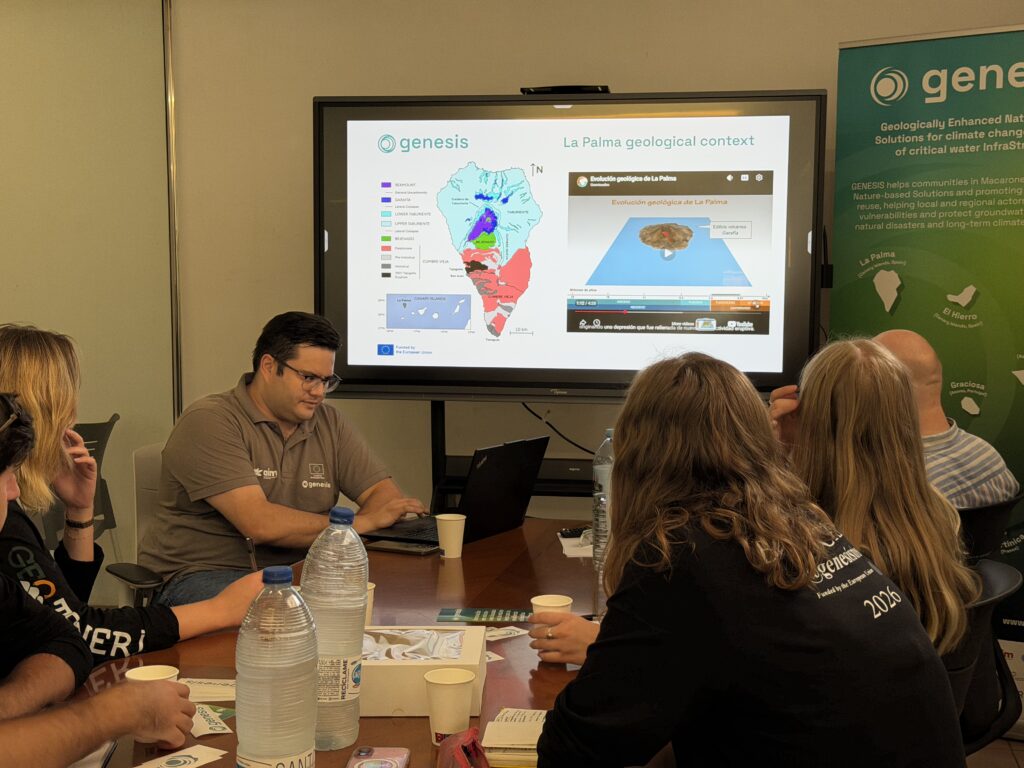
The Bootcamp began with introductory sessions on the GENESIS project, La Palma’s hydrology and the project’s demonstrator sites, together with training on the communication of large-scale scientific projects and social engagement.
A major part of the programme took place in the field, with visits to several GENESIS demonstrator sites, including Barlovento, Trasvase, Tenisca and Angustias. Students participated in water sampling, water quality and piezometric measurements, geological surveys, environmental inventories and impact assessments. These activities allowed them to work directly with scientific equipment while learning more about local water infrastructure and the implementation of nature-based solutions.
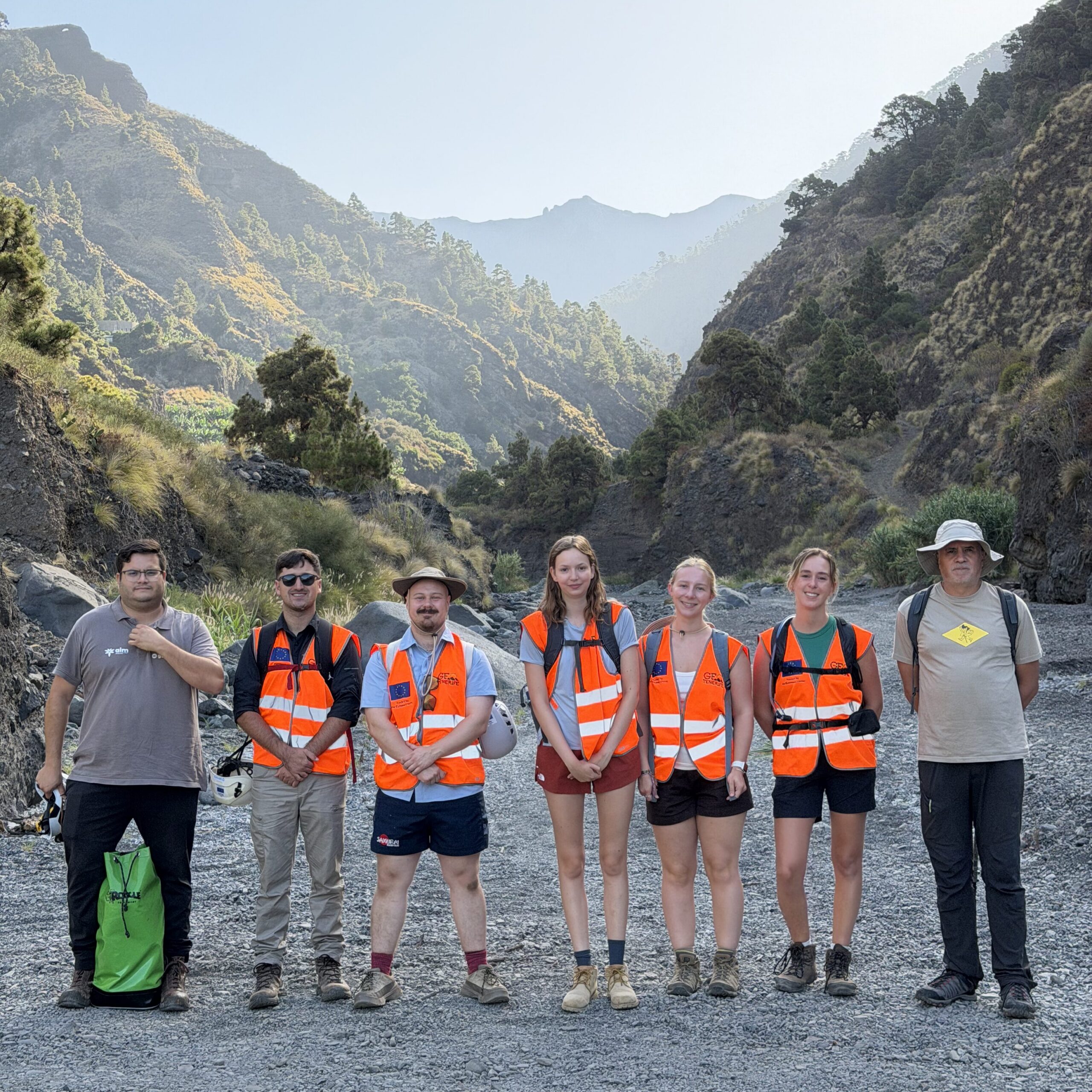
Connecting science, society and communication
Beyond the technical activities, students explored the social dimension of water management in La Palma. They conducted surveys with local stakeholders on topics such as water access, infrastructure and awareness of the GENESIS project, gaining insight into the role of local water communities, agricultural stakeholders and other actors involved in managing water resources.
Communication was also an important part of the Bootcamp. Workshops supported students in transforming their fieldwork and findings into scientific reports, posters, abstracts and other communication materials. Dedicated sessions at the end of the programme allowed participants to analyse their data, prepare their results and finalise their outputs.
The programme was complemented by outdoor activities that helped participants discover the natural environment shaping La Palma’s water systems, including visits to Barranco de Las Angustias and La Caldera de Taburiente National Park.